Ladakh Tourist Places & Travel Guide

Discover 39 travel destinations across 7 regions of Ladakh.

Regions in Ladakh

Featured Destinations in Ladakh

Leh Palace (Lhachen Palkhar)

Leh Palace (Lhachen Palkhar)

Leh & Central Indus Valley

Built by King Sengge Namgyal around 1600, Leh Palace towers over the old town with distinctive Tibetan earthen architecture modeled on Lhasa's Potala Palace. Today, maintained by the Archaeological Survey of India, its rooftop offers commanding 360-degree vistas across Leh town, the Indus valley, and the snow-draped Stok range.

₹25 for Indians, ₹300 for Foreigners View Spot →
Shanti Stupa

Shanti Stupa

Leh & Central Indus Valley

Perched on a steep hilltop in Changspa, Shanti Stupa was consecrated in 1991 by the 14th Dalai Lama as a symbol of world peace. Its white circular dome features relief panels illustrating the life of Lord Buddha. Sunset here is one of the most breathtaking experiences in Ladakh as evening light washes golden across Leh and the mountain rim.

Thiksey Monastery

Thiksey Monastery

Leh & Central Indus Valley

Resembling the Potala Palace in structure and grandeur, Thiksey Monastery belongs to the Gelugpa (Yellow Hat) order. Founded in 1430, the 12-storey complex cascades down an isolated rocky hill in the Indus Valley. Its most revered jewel is a colossal 15-meter tall statue of Maitreya Buddha, adorned with delicate jewelry and lotus-crowned serenity.

₹50 per person View Spot →
Hemis Monastery

Hemis Monastery

Leh & Central Indus Valley

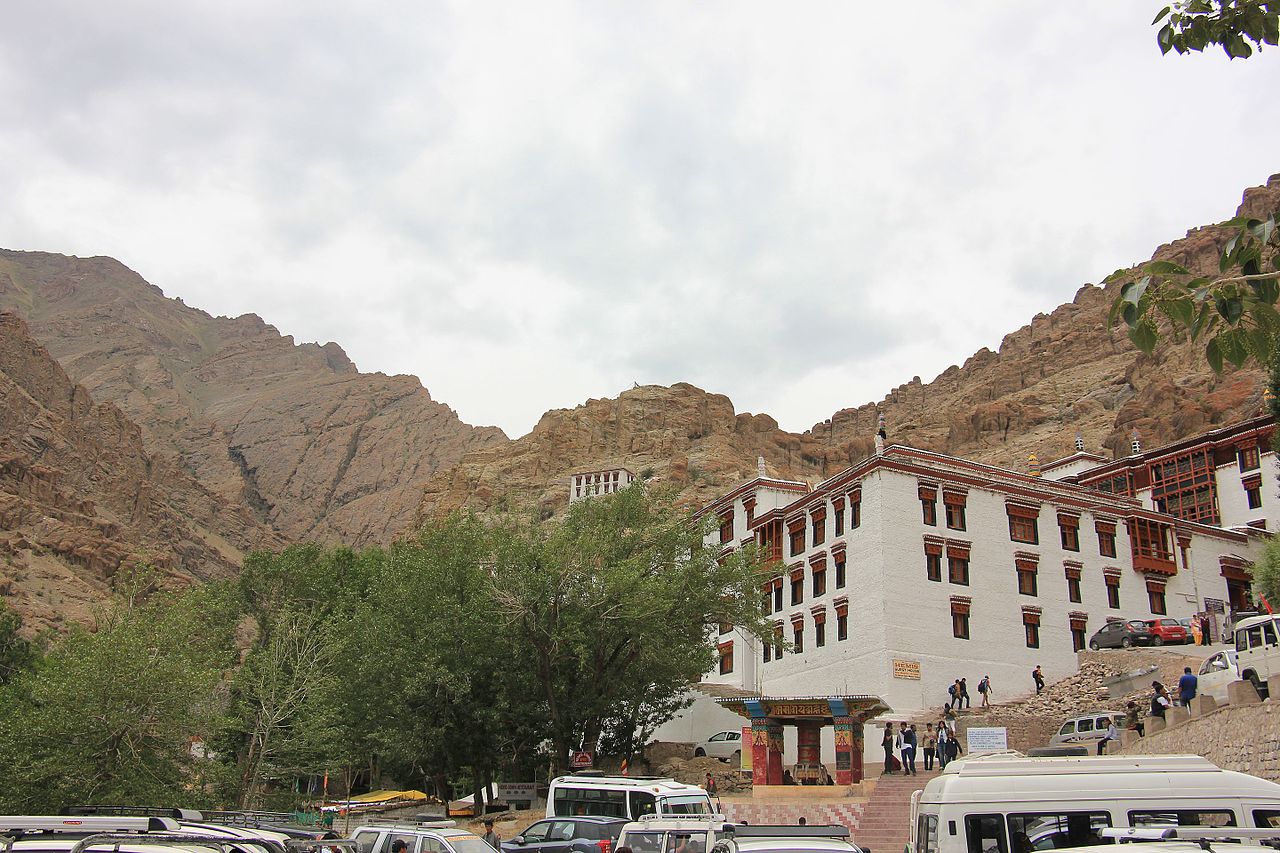
Tucked inside a hidden gorge 45 kilometers south of Leh, Hemis Monastery was re-established in 1672 by King Sengge Namgyal. As the head seat of the Drukpa lineage, it houses priceless copper-gilt statues, sacred thangkas, and an underground museum. Every summer, its courtyard explodes with color during the Hemis Tsechu masked Cham dance festival.

₹100 (includes museum access) View Spot →
Shey Palace & Monastery

Shey Palace & Monastery

Leh & Central Indus Valley

Shey was the ancient summer capital of upper Ladakh. Built in 1655, the royal complex rests on a craggy spur overlooking fields of poplars and willow groves. Within its shrine sits a massive 12-meter high Shakyamuni Buddha statue cast from copper sheets and plated with pure gold, attended by eternal butter lamps.

₹30 per person View Spot →
Stok Palace & Museum

Stok Palace & Museum

Leh & Central Indus Valley

Constructed in 1820 after the Dogra invasion forced the royal family from Leh, Stok Palace remains the current residence of the Ladakhi Namgyal royalty. Its palace museum exhibits priceless royal crowns, turquoise jewelry, 16th-century weapons, and ceremonial prayer objects.

₹50 per person View Spot →
Spituk Gompa

Spituk Gompa

Leh & Central Indus Valley

Founded by Od-de in the 11th century and later revitalized by the Gelug order, Spituk Gompa perches proudly atop a rocky knoll overlooking the Indus plains. It enshrines a revered giant statue of Goddess Kali (Palden Lhamo), veiled throughout the year and revealed only during the annual Spituk Gustor festival.

₹30 per person View Spot →
Hall of Fame Leh

Hall of Fame Leh

Leh & Central Indus Valley

Constructed and maintained by the Indian Army, the Hall of Fame on the Leh-Kargil highway pays tribute to the courageous soldiers who made supreme sacrifices during conflicts in Ladakh. The museum exhibits high-altitude Siachen warfare equipment, wildlife displays, and cultural exhibits on Ladakhi tribes.

₹150 for adults (includes light & sound show) View Spot →
Hunder Sand Dunes & Bactrian Camels

Hunder Sand Dunes & Bactrian Camels

Nubra Valley & Shyok River

Hunder's white sand dunes at 10,000 feet represent one of the world's highest desert wonders. Strolling these cold-desert wind ripples surrounded by stark snow-capped mountain peaks and riding the two-humped Bactrian camels—descendants of ancient Silk Road caravans—is an unforgettable Himalayan encounter.

₹20 entry; Camel ride ₹300-500 View Spot →
Diskit Monastery & Giant Maitreya

Diskit Monastery & Giant Maitreya

Nubra Valley & Shyok River

Diskit Gompa is the oldest and largest Buddhist monastery in Nubra Valley, established in the 14th century by Changzem Tserab Zangpo. Overlooking the Shyok river basin stands an awe-inspiring 32-meter (106-foot) statue of Maitreya Buddha, consecrated by the Dalai Lama to bless the valley with peace and prosperity.

₹30 per person View Spot →
Turtuk Village & Balti Heritage Hidden Gem

Turtuk Village & Balti Heritage

Nubra Valley & Shyok River

Opened to tourists only in 2010, Turtuk sits on the banks of the Shyok River near the Line of Control. Geographically part of Baltistan, it possesses a unique language, stone wood-carved traditional houses, stone aqueducts, lush apricot orchards, and the Yabgo Royal Palace museum.

Free; Palace Museum ₹100 View Spot →
Panamik Hot Springs Hidden Gem

Panamik Hot Springs

Nubra Valley & Shyok River

Located around 55 kilometers north of Diskit along the Nubra River, Panamik is famous for its natural hot sulphur springs bubbling out of granite rocks. Revered for centuries by local caravans for curing rheumatism and body aches, visitors can soak in newly constructed hot water bath complexes.

₹50 for thermal bath cubicle View Spot →
Samstanling Monastery (Sumur) Hidden Gem

Samstanling Monastery (Sumur)

Nubra Valley & Shyok River

Built in 1841 by Lama Tsultim Nima in the village of Sumur, Samstanling Gompa is renowned for its immaculate cleanliness, traditional red-gold Tibetan woodwork, and vivid wall murals depicting Buddhist cosmologies. It provides an intimate, tranquil counterpoint to the larger Nubra gompas.

₹20 per person View Spot →
Khardung La Pass

Khardung La Pass

Nubra Valley & Shyok River

Perched at an astonishing elevation of 5,359 meters (17,982 ft), Khardung La is celebrated across the globe as one of the highest motorable mountain passes. Maintained year-round by the Border Roads Organisation, the summit features fluttering prayer flags, an army souvenir shop, and views of the Karakoram range.

Ladakh Environmental / Protected Area Permit View Spot →
Pangong Tso Lake (Spangmik & Lukung)

Pangong Tso Lake (Spangmik & Lukung)

Pangong Tso & Changthang Plateau

At an altitude of 4,350 meters, Pangong Tso is an endorheic lake stretching over 134 km through India and Tibet. Completely freezing over in winter despite its brackish salinity, in summer the lake creates surreal optical reflections against bare brown granite peaks.

Environmental fee included in Ladakh permit View Spot →
Chang La Pass (17,688 ft)

Chang La Pass (17,688 ft)

Pangong Tso & Changthang Plateau

Standing at 5,360 meters (17,688 feet), Chang La is the third-highest motorable mountain pass in the world. It provides the crucial gateway between the Indus Valley and the Changthang plateau. Travelers stop at the Changla Baba shrine for warm herbal tea served by the Indian Army.

Included in Ladakh Inner Line Permit View Spot →
Merak & Man Hamlets Hidden Gem

Merak & Man Hamlets

Pangong Tso & Changthang Plateau

Beyond the commercialized spots of Spangmik, the quiet villages of Man and Merak hug the southern shoreline of Pangong Tso. Inhabited by warm Ladakhi farming families, Merak is renowned for pristine night skies, solar astronomy stations, and uninterrupted lake panoramas.

Tangtse River Valley & Gompa Hidden Gem

Tangtse River Valley & Gompa

Pangong Tso & Changthang Plateau

Tangtse sits along the tranquil Tangtse river just before the ascent to Pangong Tso. Once an important Silk Route hub for caravans traveling between Yarkand and Tibet, its rocky cliffs host an ancient monastery and rare 8th-century Sogdian and Tibetan petroglyphs.

Tso Moriri Wetland Sanctuary

Tso Moriri Wetland Sanctuary

Tso Moriri & Rupshu High Lakes

Resting at an elevation of 4,522 meters, Tso Moriri is the largest high-altitude lake entirely within Indian territory. Sacred to locals, no motorboats or intrusive commercial activity are permitted on its pristine waters, leaving it an undisturbed haven for bar-headed geese, great crested grebes, and Tibetan wild asses (Kiang).

Included in Ladakh Protected Area Permit View Spot →
Korzok Monastery & Changpa Nomads Hidden Gem

Korzok Monastery & Changpa Nomads

Tso Moriri & Rupshu High Lakes

Overlooking the northwestern shore of Tso Moriri, Korzok Monastery was established around 300 years ago under the Drukpa order. It serves as the primary spiritual sanctuary for the seminomadic Changpa shepherds of Rupshu who rear fine-wool Changthangi Pashmina goats.

₹20 per person View Spot →
Tso Kar White Salt Lake Hidden Gem

Tso Kar White Salt Lake

Tso Moriri & Rupshu High Lakes

Known as the White Lake due to the thick crust of white salt lining its shores, Tso Kar sits at 4,530 meters. It is a world-class birding hotspot and Ramsar site where birdwatchers can observe the endangered black-necked crane, golden eagles, and herds of wild Kiang grazing across the marsh.

Chumathang Geothermal Springs Hidden Gem

Chumathang Geothermal Springs

Tso Moriri & Rupshu High Lakes

En route from Leh to Tso Moriri along the Indus River, Chumathang is a remarkable geological spectacle where boiling geothermal water and plumes of steam hiss from gravel riverbanks right next to snowmelt currents. Locals gather here for therapeutic baths and to steam eggs in natural vents.

Free / Small tip for bath cubicle View Spot →
Lamayuru Monastery (Yuru Gompa)

Lamayuru Monastery (Yuru Gompa)

Sham Valley, Likir & Lamayuru

Founded in the 11th century by the Indian Mahasiddha Naropa, Lamayuru Gompa belongs to the Red Hat Drikung Kagyu tradition. The monastery complex perches atop sheer sandstone cliffs looking out across the barren Moonland valley. Its ancient meditation caves and assembly halls house ancient statues and murals.

₹50 per person View Spot →
Lamayuru Moonland Landscape

Lamayuru Moonland Landscape

Sham Valley, Likir & Lamayuru

Surrounding Lamayuru Monastery on the Srinagar-Leh highway, Moonland is an extraordinary geological curiosity formed by dried lacustrine clay deposits from an ancient Pleistocene lake. The yellowish-white eroded gullies and bizarre spires look like a landscape straight from the moon.

Alchi Choskor Monastery

Alchi Choskor Monastery

Sham Valley, Likir & Lamayuru

Unlike nearly all other Ladakhi gompas built on mountain crests, Alchi sits on flat ground by the Indus River. Constructed in the 11th century by the great translator Rinchen Zangpo, its Sumtseg shrine contains magnificent Kashmiri-style wood carvings and detailed miniature frescoes preserved for nearly a millennium.

₹50 for Indians, ₹100 for Foreigners View Spot →
Likir Monastery & Giant Buddha

Likir Monastery & Giant Buddha

Sham Valley, Likir & Lamayuru

Likir Gompa was founded in 1065 by King Lhachen Gyalpo and converted to the Gelugpa order in the 15th century. It is immediately recognizable across the valley by its towering 23-meter (75-foot) seated statue of Maitreya Buddha gilded in radiant gold against the cobalt blue sky.

₹30 per person View Spot →
Basgo Fort & Gompa Hidden Gem

Basgo Fort & Gompa

Sham Valley, Likir & Lamayuru

Basgo was the royal seat of the lower Ladakhi kingdom during the 15th to 17th centuries. Famous for withstanding a three-year siege by Tibet and Mongol forces in 1680, its citadel ruins and 16th-century Maitreya temples feature World Monuments Fund-restored murals and copper statues.

₹30 per person View Spot →
Magnetic Hill

Magnetic Hill

Sham Valley, Likir & Lamayuru

Located on the Leh-Kargil National Highway around 30 km from Leh, Magnetic Hill is a gravity hill phenomenon where the surrounding landscape creates an optical illusion making a slight downhill slope appear to be an uphill incline. When vehicles put in neutral inside the marked box, they appear to roll uphill on their own.

Sangam (Indus & Zanskar Confluence)

Sangam (Indus & Zanskar Confluence)

Sham Valley, Likir & Lamayuru

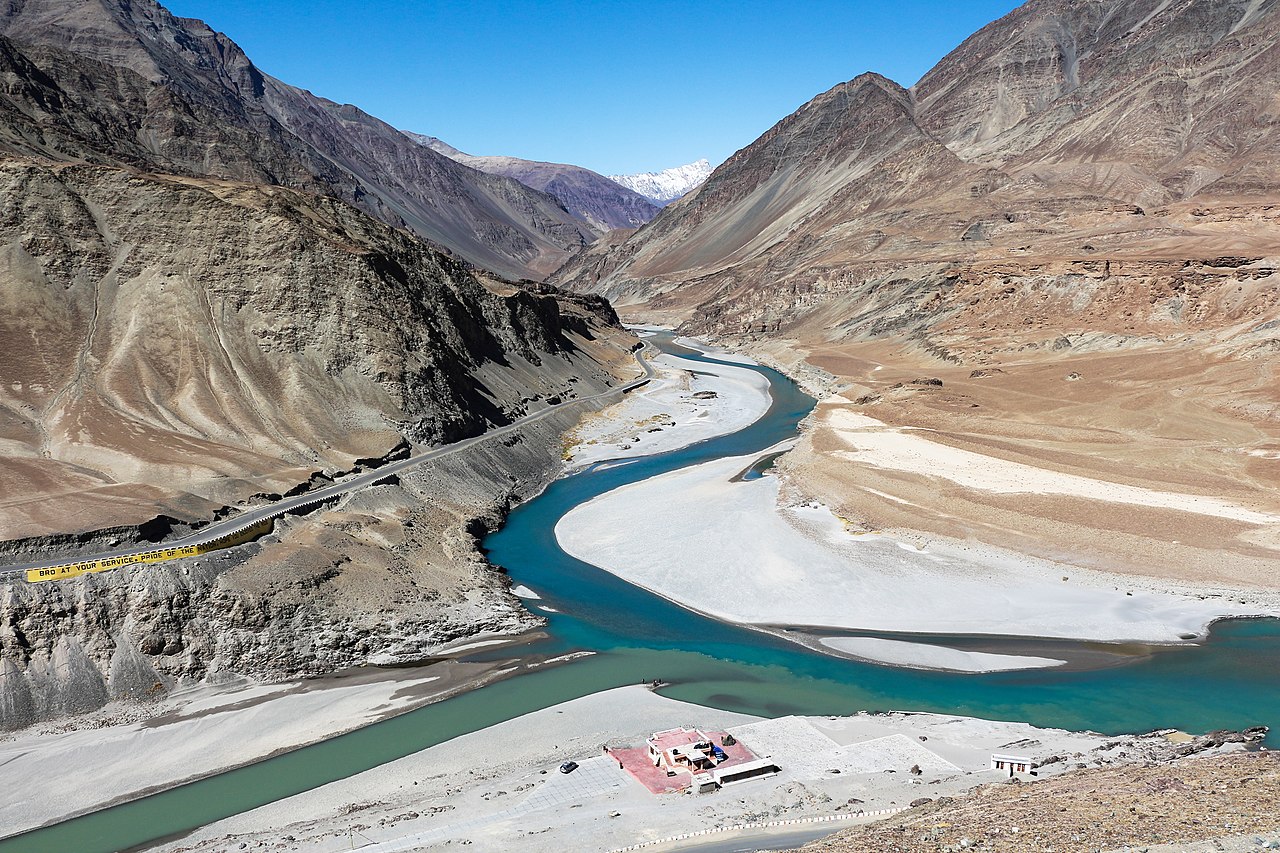
Near Nimmu, the emerald-green waters of the sacred Indus River merge with the muddy, turbulent currents of the Zanskar River. The striking contrast between the two distinct river colors can be seen clearly from the roadside viewpoint. It is also the premier launching point for Grade III-IV river rafting.

Free viewpoint; Rafting ₹1,500-2,500 View Spot →
Phuktal Cave Monastery Hidden Gem

Phuktal Cave Monastery

Zanskar Valley & Padum Highlands

One of the most astonishing monastic feats in the Himalayas, Phuktal Gompa is built into the mouth of a massive natural cave high on a vertical limestone cliff in southeastern Zanskar. Founded in the 12th century, it was visited by Hungarian pioneer Alexander Csoma de Koros and remains accessible via a breathtaking trekking footpath.

Free / Donations welcome View Spot →
Karsha Monastery (Largest in Zanskar)

Karsha Monastery (Largest in Zanskar)

Zanskar Valley & Padum Highlands

Sprawled across a rocky mountainside facing the Zanskar River and Padum town, Karsha Gompa was founded in the 10th century by Phagpa Sherab. Its white monastic dwellings step up the mountainside like an ancient fortress, housing exquisite bone carvings, golden stupas, and ancient murals.

₹30 per person View Spot →
Stongdey Monastery & Padum Valley Hidden Gem

Stongdey Monastery & Padum Valley

Zanskar Valley & Padum Highlands

Perched at an altitude of nearly 3,800 meters on a knife-edge ridge north of Padum, Stongdey Gompa is the second largest monastery in Zanskar, founded in 1052. The view from its flat whitewashed rooftops looking down upon the meandering river loops and barley terraces of Padum is unmatched.

₹30 per person View Spot →
Zangla Fort & Royal Palace Hidden Gem

Zangla Fort & Royal Palace

Zanskar Valley & Padum Highlands

Guarding the northern entry into Zanskar, the fortress palace of Zangla stands atop a hillock overlooking the river valley. In 1823, Alexander Csoma de Koros lived in a small cell here for sixteen months, compiling the very first Tibetan-English dictionary and grammar book.

Drang-Drung Glacier

Drang-Drung Glacier

Zanskar Valley & Padum Highlands

Visible right from the Pensi La pass, Drang-Drung is a colossal glacier flowing over 23 kilometers down from high mountain peaks. Looking like a winding white-and-silver dragon curving down the mountain bowl, it gives birth to the Stod River, a primary headwater of the Zanskar.

Pensi La Pass (Gateway to Zanskar)

Pensi La Pass (Gateway to Zanskar)

Zanskar Valley & Padum Highlands

Standing at 4,400 meters (14,436 feet), Pensi La connects the Suru Valley in Kargil to the remote highlands of Zanskar. The summit plateau is adorned with high alpine glacial tarns, fields of edelweiss flowers in summer, and jaw-dropping perspectives of the Drang-Drung glacier.

Kargil War Memorial (Drass)

Kargil War Memorial (Drass)

Kargil & Suru Valley Foothills

Located along the Srinagar-Leh National Highway in Dras (the second coldest inhabited place in the world), the Kargil War Memorial was built by the Indian Army in memory of the martyrs of the 1999 Kargil War. Overlooked by Tololing, Tiger Hill, and Point 4875, it holds the Amar Jawan Jyoti and an evocative war museum.

₹50 per person View Spot →
Suru Valley & Nun-Kun Viewpoint

Suru Valley & Nun-Kun Viewpoint

Kargil & Suru Valley Foothills

Extending from Kargil southwards toward Pensi La, Suru Valley is one of the greenest and most scenic corners of Ladakh. Flowing through fields of willows and wild roses, the valley is dominated by the majestic ice wall of the Nun-Kun massif (7,135m), the highest peaks in the Union Territory.

Hunderman Brok (Museum of Memories) Hidden Gem

Hunderman Brok (Museum of Memories)

Kargil & Suru Valley Foothills

Perched on a mountain face just 10 kilometers from Kargil town overlooking the Line of Control, Hunderman was once part of Pakistan until the 1971 war. The abandoned centuries-old stone houses have been lovingly preserved as the 'Museum of Memories', documenting the personal stories, wartime letters, and household relics of divided border families.

₹50 suggested museum contribution View Spot →
Mulbekh Chamba Rock Carving

Mulbekh Chamba Rock Carving

Kargil & Suru Valley Foothills

Standing right beside the national highway between Kargil and Leh in Mulbekh village, this magnificent 9-meter (30-foot) high bas-relief image of Maitreya Buddha was carved into an isolated limestone rock pinnacle around the 8th century during the Kushan or early Tibetan epoch. It represents a vital transitional artistic link between ancient Gandharan and Tibetan art.

₹20 per person View Spot →