West Bengal Tourist Places & Travel Guide

Discover 52 travel destinations across 10 regions of West Bengal.

Regions in West Bengal

Featured Destinations in West Bengal

Victoria Memorial

Victoria Memorial

Kolkata & Hooghly Heritage

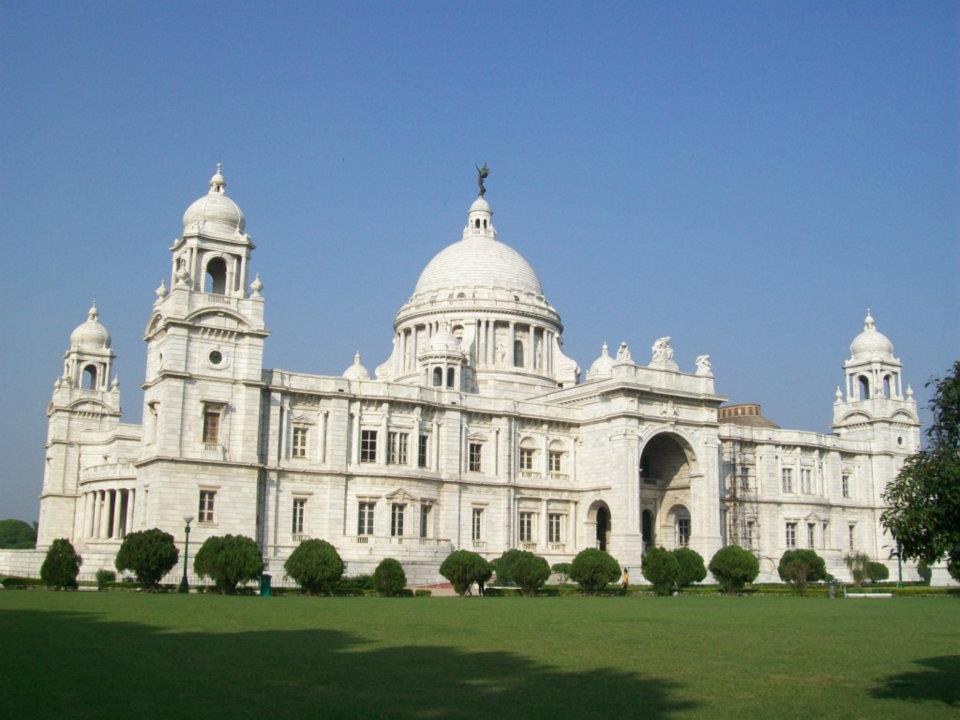
Built between 1906 and 1921 using gleaming white Makrana marble, the Victoria Memorial is Kolkata's premier architectural symbol. Designed in an exquisite Indo-Saracenic revival style, it houses 25 galleries containing rare colonial-era paintings, sculptures, royal manuscripts, and expansive manicured gardens.

₹50 (Indians) / ₹500 (Foreigners) / Garden only ₹20 View Spot →
Howrah Bridge (Rabindra Setu)

Howrah Bridge (Rabindra Setu)

Kolkata & Hooghly Heritage

Commissioned in 1943 without a single nut or bolt and constructed entirely from high-tensile alloy steel rivets, Rabindra Setu is one of the world's longest balanced cantilever suspension bridges. It connects Kolkata and Howrah across the Hooghly River, carrying hundreds of thousands of commuters daily.

Dakshineswar Kali Temple

Dakshineswar Kali Temple

Kolkata & Hooghly Heritage

Founded in 1855 by the philanthropic queen Rani Rashmoni along the eastern banks of the Hooghly River, this magnificent nine-spire (Navaratna) temple is consecrated to Bhavatarini, an aspect of Goddess Kali. The complex includes 12 riverside Shiva shrines, a Radha-Krishna temple, and Ramakrishna's sacred chamber.

Indian Museum (Jadughar)

Indian Museum (Jadughar)

Kolkata & Hooghly Heritage

Known affectionately in Bengali as Jadughar ('House of Wonders'), the Indian Museum is the oldest and largest multipurpose museum in the Asia-Pacific. Founded by the Asiatic Society in 1814, it preserves over 100,000 antiquities, including Ashoka lion capital replicas, dinosaur fossils, and Buddhist stupa railings.

₹50 (Adults) / ₹20 (Children) / ₹500 (Foreigners) View Spot →
Marble Palace Hidden Gem

Marble Palace

Kolkata & Hooghly Heritage

Built in 1835 by Raja Rajendra Mullick, this neoclassical mansion in North Kolkata is renowned for its 126 types of Italian marble walls, classical Western sculptures, Belgian glassware, and original European oil paintings by masters like Peter Paul Rubens and Sir Joshua Reynolds.

Free (Prior entry permit required from West Bengal Tourism) View Spot →
Belur Math (Ramakrishna Mission Headquarters)

Belur Math (Ramakrishna Mission Headquarters)

Kolkata & Hooghly Heritage

Set along 40 tranquil acres on the west bank of the Hooghly River, Belur Math is the world headquarters of the Ramakrishna Math and Mission. Conceived by Swami Vivekananda, the main temple artfully weaves motifs from Christian cathedrals, Islamic mosques, and Hindu temples, symbolizing universal harmony.

Princep Ghat & Vidyasagar Setu

Princep Ghat & Vidyasagar Setu

Kolkata & Hooghly Heritage

Erected in 1843 in honor of Anglo-Indian scholar James Prinsep, this Palladian Greek-style monument is situated directly on the Hooghly promenade. It offers traditional wooden country boat rides along the river, sunset views framed under the cable-stayed Vidyasagar Setu, and scenic landscaped gardens.

Free (Boat rides approx ₹300-500) View Spot →
St. Paul's Cathedral

St. Paul's Cathedral

Kolkata & Hooghly Heritage

Consecrated in 1847, St. Paul's Cathedral is the seat of the Diocese of Calcutta and the first major Anglican cathedral in the British Empire outside the British Isles. Featuring soaring Gothic Revival arches, a spire modeled after Norwich Cathedral, and stained-glass windows designed by Sir Edward Burne-Jones.

Tiger Hill Sunrise Viewpoint

Tiger Hill Sunrise Viewpoint

Darjeeling & Kanchenjunga Ridges

Perched at an elevation of 2,590 meters (8,500 ft), 11 km from Darjeeling town, Tiger Hill is world-famous for its sunrise spectacles. As dawn breaks, sunlight first touches the twin summits of Kanchenjunga in fiery orange and gold, while on clear days the distant silhouette of Mount Everest is visible on the western horizon.

₹20 (Ground) / ₹30-50 (Observatory gallery) View Spot →
Batasia Loop & War Memorial

Batasia Loop & War Memorial

Darjeeling & Kanchenjunga Ridges

Constructed in 1919 to negotiate the steep 1,000-foot gradient drop on the Darjeeling Himalayan Railway, Batasia Loop is an engineering marvel where the vintage steam train navigates a complete 360-degree spiral. The center features a memorial honoring brave Gurkha soldiers surrounded by pristine seasonal gardens.

Happy Valley Tea Estate

Happy Valley Tea Estate

Darjeeling & Kanchenjunga Ridges

Covering 177 hectares at an elevation of 2,100 meters just 3 km from Darjeeling town center, Happy Valley Tea Estate is among the oldest organic tea gardens in the world. Visitors can stroll along hillside tea bushes, tour the historic processing factory, and taste world-famous first-flush and muscatel teas.

₹100 (Factory guided tour & tea tasting) View Spot →
Japanese Peace Pagoda

Japanese Peace Pagoda

Darjeeling & Kanchenjunga Ridges

Constructed under the guidance of Nichidatsu Fujii, founder of the Nipponzan Myohoji Buddhist order, the Peace Pagoda on the slopes of Jalapahar hill rises 28.5 meters high. The pagoda showcases four avatars of Lord Buddha carved in sandstone and provides panoramic views over the Darjeeling valley.

Ghoom Monastery (Yiga Choeling)

Ghoom Monastery (Yiga Choeling)

Darjeeling & Kanchenjunga Ridges

Established in 1850 by Mongolian astrologer Lama Sherab Gyatso, Old Ghoom Monastery (Yiga Choeling) is the oldest Tibetan Buddhist monastery in Darjeeling. Inside the sanctuary stands an awe-inspiring 15-foot clay sculpture of the Future Buddha (Maitreya), adorned with gold leaf and rare Buddhist manuscripts.

Sandakphu (Highest Peak in West Bengal)

Sandakphu (Highest Peak in West Bengal)

Darjeeling & Kanchenjunga Ridges

Standing at 3,636 meters along the Singalila Ridge on the Indo-Nepal border, Sandakphu is the highest peak in West Bengal. It is globally renowned for offering an uninhibited view of four of the world's five highest mountains — Everest, Kanchenjunga, Lhotse, and Makalu — arranged in the sacred 'Sleeping Buddha' formation.

₹120 (Singalila National Park permit) / Guide mandatory View Spot →
Deolo Hill Viewpoint

Deolo Hill Viewpoint

Kalimpong & Dooars Wildlife Foothills

At an altitude of 1,704 meters, Deolo Hill is the highest point of Kalimpong town. Developed with eight acres of manicured hillside gardens, exotic flower beds, and a tourist lodge, it provides sweeping 360-degree panoramas of the snow-clad peaks of West Sikkim, the Relli valley, and the meandering Teesta River.

Morgan House (Durpin Heritage Mansion) Hidden Gem

Morgan House (Durpin Heritage Mansion)

Kalimpong & Dooars Wildlife Foothills

Constructed in the 1930s by wealthy English jute merchant George Morgan, this magnificent stone-and-timber British colonial cottage sits atop Durpin Dara hill. Now operated by West Bengal Tourism Development Corporation (WBTDC), it preserves stone fireplaces, ivy-draped chimneys, and views of Kanchenjunga.

Free for visitors / Lodge booking as per WBTDC rates View Spot →
Lava & Neora Valley National Park Hidden Gem

Lava & Neora Valley National Park

Kalimpong & Dooars Wildlife Foothills

Situated at an altitude of 2,138 meters, Lava serves as the entry gate to Neora Valley National Park, one of the richest biological zones in eastern India. The park protects untouched virgin canopy forests, bamboo groves sheltering red pandas, clouded leopards, and over 200 species of Himalayan birds.

₹120 (Forest entry permit) View Spot →
Jaldapara National Park (Rhino Sanctuary)

Jaldapara National Park (Rhino Sanctuary)

Kalimpong & Dooars Wildlife Foothills

Nestled in the eastern Himalayan foothills across 216 sq km along the floodplains of the Torsa River, Jaldapara holds the largest population of the Great Indian One-Horned Rhinoceros in West Bengal. Elephant safaris and open jeep drives explore extensive tall elephant-grass savannahs sheltering elephants, leopards, and Bengal floricans.

₹100 (Entry) / Safari ₹1,500-2,500 per jeep View Spot →
Gorumara National Park

Gorumara National Park

Kalimpong & Dooars Wildlife Foothills

Located in the Malbazar subdivision of Jalpaiguri on the banks of Murti and Raidak rivers, Gorumara encompasses 80 sq km of lush terai floodplains. Celebrated for its rhino and elephant viewing watchtowers like Jatraprasad and Medla, it is also home to gaur (Indian bison), sambar, and hornbills.

₹120 (Entry) / Watchtower permits extra View Spot →
Buxa Fort & Buxa Tiger Reserve Hidden Gem

Buxa Fort & Buxa Tiger Reserve

Kalimpong & Dooars Wildlife Foothills

Perched at 867 meters in the Sinchula Range on the Bhutan border, Buxa Fort was captured by the British in the 1865 Sinchula Treaty and turned into an impenetrable high-security detention camp where Indian freedom fighters were interned. The surrounding Tiger Reserve is a rugged biodiversity hotspot.

₹50 (Reserve entry) / Guide ₹300-500 View Spot →
Sajnekhali Bird & Wildlife Sanctuary

Sajnekhali Bird & Wildlife Sanctuary

Sundarbans Mangrove Delta & Tiger Biosphere

Serving as the primary entry point for boat safaris into the Sundarbans National Park, Sajnekhali features a high watchtower overlooking the confluence of Matla and Gumdi rivers. It houses a mangrove interpretation center, Bono Bibi shrine, sweet water pond attracting wildlife, and a breeding pond for the Batagur baska terrapin.

₹60 (Entry) / Boat entry permits extra View Spot →
Dobanki Canopy Walkway

Dobanki Canopy Walkway

Sundarbans Mangrove Delta & Tiger Biosphere

Dobanki offers an extraordinary experience with its 496-meter-long caged aerial canopy walkway suspended 20 feet above the forest floor. Visitors safely traverse above mangrove roots and tidal creeks, gaining bird's-eye views of spotted deer, monitor lizards, kingfishers, and the occasional wandering Royal Bengal tiger.

Included in Sundarbans Forest Boat Permit View Spot →
Netidhopani Historic Watchtower & Ruins Hidden Gem

Netidhopani Historic Watchtower & Ruins

Sundarbans Mangrove Delta & Tiger Biosphere

Steeped in Bengali folk mythology, Netidhopani houses the remains of a 400-year-old brick temple where washerwoman Neti Dhopani is said to have aided Behula on her mythological river journey. The watchtower overlooks a freshwater watering hole frequently visited by tigers and estuarine crocodiles.

Included in Sundarbans Boat Permit View Spot →
Sudhanyakhali Watchtower & Freshwater Pond

Sudhanyakhali Watchtower & Freshwater Pond

Sundarbans Mangrove Delta & Tiger Biosphere

Considered the premier watchtower in the Sundarbans for spotting the elusive Royal Bengal Tiger, Sudhanyakhali overlooks an extensive sweet water pond surrounded by cleared mudflats. Animals congregate here to drink, creating prime photography opportunities for spotted deer, wild boars, and saltwater crocodiles.

Included in Sundarbans Boat Permit View Spot →
Rasmancha (Pyramidal Terracotta Monument)

Rasmancha (Pyramidal Terracotta Monument)

Bishnupur & Bankura Terracotta Temples

Commissioned around 1600 CE by Malla King Bir Hambir, Rasmancha is the oldest brick structure in Bishnupur and unique in all of India. Resting on a high square laterite plinth, it is crowned by a stepped pyramid-like roof surrounded by Bengal-style chala hut turrets and arched galleries where deities were displayed during the Ras festival.

₹25 (Combined ASI ticket for all Bishnupur monuments) View Spot →
Jor Bangla Temple (Keshta Raya Temple)

Jor Bangla Temple (Keshta Raya Temple)

Bishnupur & Bankura Terracotta Temples

Built in 1655 CE by Malla King Raghunath Singha, the Jor Bangla (twin hut) temple joins two do-chala thatch-styled brick structures crowned by a char-chala tower. Its entire outer surface is an open-air art gallery of exquisitely carved terracotta panels depicting scenes from the Ramayana, Mahabharata, and royal hunts.

Included in ASI Bishnupur ticket (₹25) View Spot →
Shyamrai Temple (Pancha-Ratna Shrine)

Shyamrai Temple (Pancha-Ratna Shrine)

Bishnupur & Bankura Terracotta Temples

Erected in 1643 CE by King Raghunath Singha, the Shyamrai Temple is the earliest Pancha-Ratna (five-pinnacled) temple in Bengal. The temple is celebrated for its circular Raslila medallions on terracotta tiles displaying Krishna dancing with the Gopis, considered the pinnacle of Malla terracotta artistry.

Included in ASI Bishnupur ticket (₹25) View Spot →
Madan Mohan Temple

Madan Mohan Temple

Bishnupur & Bankura Terracotta Temples

Constructed in 1694 CE by King Durjana Singha Deva, the Madan Mohan Temple features the classic Ek-Ratna design with a curved roof crowned by a single central pinnacle. Unlike many archaeological temples in Bishnupur, it remains an active living shrine with lively daily prayers and rituals.

Included in ASI Bishnupur ticket (₹25) View Spot →
Susunia Hill & Ancient Spring Hidden Gem

Susunia Hill & Ancient Spring

Bishnupur & Bankura Terracotta Temples

Rising 440 meters above the Bankura plains, Susunia Hill is an ancient geological formation famous as a pioneer rock climbing training ground in Eastern India. It houses the 4th-century CE rock inscription of King Chandravarman, natural medicinal freshwater springs, and stone-carving artisans.

Mukutmanipur Kangsabati Dam & Deer Park

Mukutmanipur Kangsabati Dam & Deer Park

Bishnupur & Bankura Terracotta Temples

Spanning 11 km across the confluence of the Kangsabati and Kumari rivers, Mukutmanipur Dam is India's second largest earthen dam. Surrounded by rolling green hills, it features sunset motorboat cruises to Bonpukuria Deer Park island and ancient Jain temples at Pareshnath.

Free (Boat rides ₹400-800) View Spot →
Visva-Bharati Uttarayan Complex & Ashram

Visva-Bharati Uttarayan Complex & Ashram

Shantiniketan & Rarh Cultural Plains

Inscribed as a UNESCO World Heritage site, the Uttarayan Complex comprises five distinct homes designed for Rabindranath Tagore — Udayan, Konarka, Shyamali, Punashcha, and Udichi. The complex houses Rabindra Bhavana museum showcasing Tagore's original manuscripts, paintings, and Nobel Prize replica.

₹50 (Museum & Complex) View Spot →
Sonajhuri Forest & Khoai River

Sonajhuri Forest & Khoai River

Shantiniketan & Rarh Cultural Plains

Characterized by golden acacia (Sonajhuri) trees and eroded red laterite canyon formations known locally as 'Khoai', this woodland comes alive with soul-stirring Baul music and the vibrant Saturday Sonajhuri Haat, where local Santhal and rural artisans display Dokra, Kantha, and terracotta crafts.

Tarapith Tantric Kali Temple

Tarapith Tantric Kali Temple

Shantiniketan & Rarh Cultural Plains

Located on the banks of the Dwarka River in Birbhum, Tarapith is one of the most revered Shaktipeeths in India, consecrated to Goddess Tara. Adjacent to the red-roofed temple lies the famous cremation ground where 19th-century enlightened mystic Bamakhepa performed intensive sadhana.

Kankalitala Shaktipeeth & Temple Pond

Kankalitala Shaktipeeth & Temple Pond

Shantiniketan & Rarh Cultural Plains

Just 9 km from Bolpur along the serene banks of the Kopai River, Kankalitala is recognized as one of the 51 Shaktipeeths where Sati's waist (kankal) fell. Adjacent to the peaceful temple is a sacred stepped pond revered as the divine receptacle of the relic.

Hazarduari Palace & Museum

Hazarduari Palace & Museum

Murshidabad & Nawabi Bengal Citadel

Constructed in grand Greek Doric style on the banks of the Bhagirathi River for Nawab Nazim Humayun Jah, Hazarduari Palace boasts 1,000 doors (900 of which are optical illusions). Preserved by the ASI, its museum contains armory, the mirror hall, royal chandeliers, and the silver throne of the Nawabs.

₹25 (Indians) / ₹300 (Foreigners) View Spot →
Katra Mosque

Katra Mosque

Murshidabad & Nawabi Bengal Citadel

Erected in 1723 CE by Nawab Murshid Quli Khan (the founder of Murshidabad), this monumental brick mosque features two towering 70-foot octagonal minarets with winding spiral staircases. Underneath the entrance staircase lies the humble final resting place of the Nawab.

Nizamat Imambara

Nizamat Imambara

Murshidabad & Nawabi Bengal Citadel

Constructed in 1847 by Nawab Nazim Mansur Ali Khan Feradun Jah, the Nizamat Imambara spans 680 feet in length, making it the largest Imambara in India and Bengal. It features gleaming white facades, ornate prayer halls, and the sacred Medina enclosure.

Wasif Manzil (New Palace) Hidden Gem

Wasif Manzil (New Palace)

Murshidabad & Nawabi Bengal Citadel

Built in 1904 by Nawab Bahadur Sir Wasif Ali Mirza just south of Hazarduari Palace, Wasif Manzil is designed like a miniature European castle. Preserved by the ASI, the palace boasts semi-circular arches, antique marble statues, and landscaped gardens.

Included in Hazarduari ticket View Spot →
Motijheel Lake & Historic Garden

Motijheel Lake & Historic Garden

Murshidabad & Nawabi Bengal Citadel

Originally excavated as a horseshoe-shaped lake for natural pearl cultivation by Nawazish Muhammad Khan, Motijheel was the residence of Ghaseti Begum. Later, Lord Clive stayed here after the Battle of Plassey in 1757. Today, it features an eco-tourism park with sound-and-light shows, musical fountains, and boating.

New Digha & Old Digha Sea Beach

New Digha & Old Digha Sea Beach

Digha, Mandarmani & Coastal Belts

Originally praised by Warren Hastings as the 'Brighton of the East', Digha is Bengal's most popular seaside destination. Spanning a 7-kilometer flat sandy shoreline, it features the Marine Aquarium, beachfront promenade, and dramatic sunrises and sunsets over calm waters.

Mandarmani Beach (Drive-In Shoreline)

Mandarmani Beach (Drive-In Shoreline)

Digha, Mandarmani & Coastal Belts

Boasting a 13-kilometer-long stretch of hard-packed sand, Mandarmani is celebrated as one of India's longest drive-in beaches. The peaceful shoreline is famous for colonies of tiny red ghost crabs that carpet the sands like a red velvet rug during low tide, offering water sports and sunset seaside resorts.

Tajpur Beach & Casuarina Groves Hidden Gem

Tajpur Beach & Casuarina Groves

Digha, Mandarmani & Coastal Belts

Located between Mandarmani and Shankarpur, Tajpur is one of Bengal's most tranquil coastal getaways. Sheltered by deep casuarina and eucalyptus forests with no commercial crowds, it provides an idyllic natural setting for beach strolls and viewing vibrant red ghost crabs.

Shankarpur Beach & Fishing Harbor Hidden Gem

Shankarpur Beach & Fishing Harbor

Digha, Mandarmani & Coastal Belts

Just 14 km east of Digha, Shankarpur is both a serene beach destination and an active deep-sea fishing port. The beach is lined with towering casuarina trees, offering vantage points to watch hundreds of fishing trawlers return with their daily ocean catch against the backdrop of the sunrise.

Ayodhya Hills & Mayur Pahar Viewpoint

Ayodhya Hills & Mayur Pahar Viewpoint

Purulia & Ayodhya Hills

An eastern extension of the Chota Nagpur Plateau, Ayodhya Hills reaches an elevation of 610 meters above sea level. Deeply rooted in Ramayana mythology where Lord Rama and Sita are said to have stayed during exile, the hill features Mayur Pahar (Peacock Hill) viewpoint and Upper Dam panoramic reservoir.

Bamni Falls & River Cascades Hidden Gem

Bamni Falls & River Cascades

Purulia & Ayodhya Hills

Hidden deep within the Ayodhya Hill forest, Bamni Falls is a perennial multi-tiered waterfall cascading dramatically over massive granite boulders. A trek descending several hundred rock-cut steps through dense sal and mahua groves leads to natural pools at the foot of the gorge.

Turga Falls & Turga Dam Hidden Gem

Turga Falls & Turga Dam

Purulia & Ayodhya Hills

Turga Falls is famous for its crystalline water that pours over rugged granite formations into a secluded forest stream. Nearby lies the Turga Dam and reservoir, providing a tranquil picnic spot framed by forested hill slopes.

Charida Chhau Mask Village Hidden Gem

Charida Chhau Mask Village

Purulia & Ayodhya Hills

Nestled at the foothills of Ayodhya Hills, Charida is a unique craft village where over 300 families of master artisans have hand-crafted the elaborate paper-mâché, clay, and feather-studded masks used in Purulia's UNESCO-recognized martial Chhau dance for over 150 years.

Joychandi Pahar & Rock Climbing Hidden Gem

Joychandi Pahar & Rock Climbing

Purulia & Ayodhya Hills

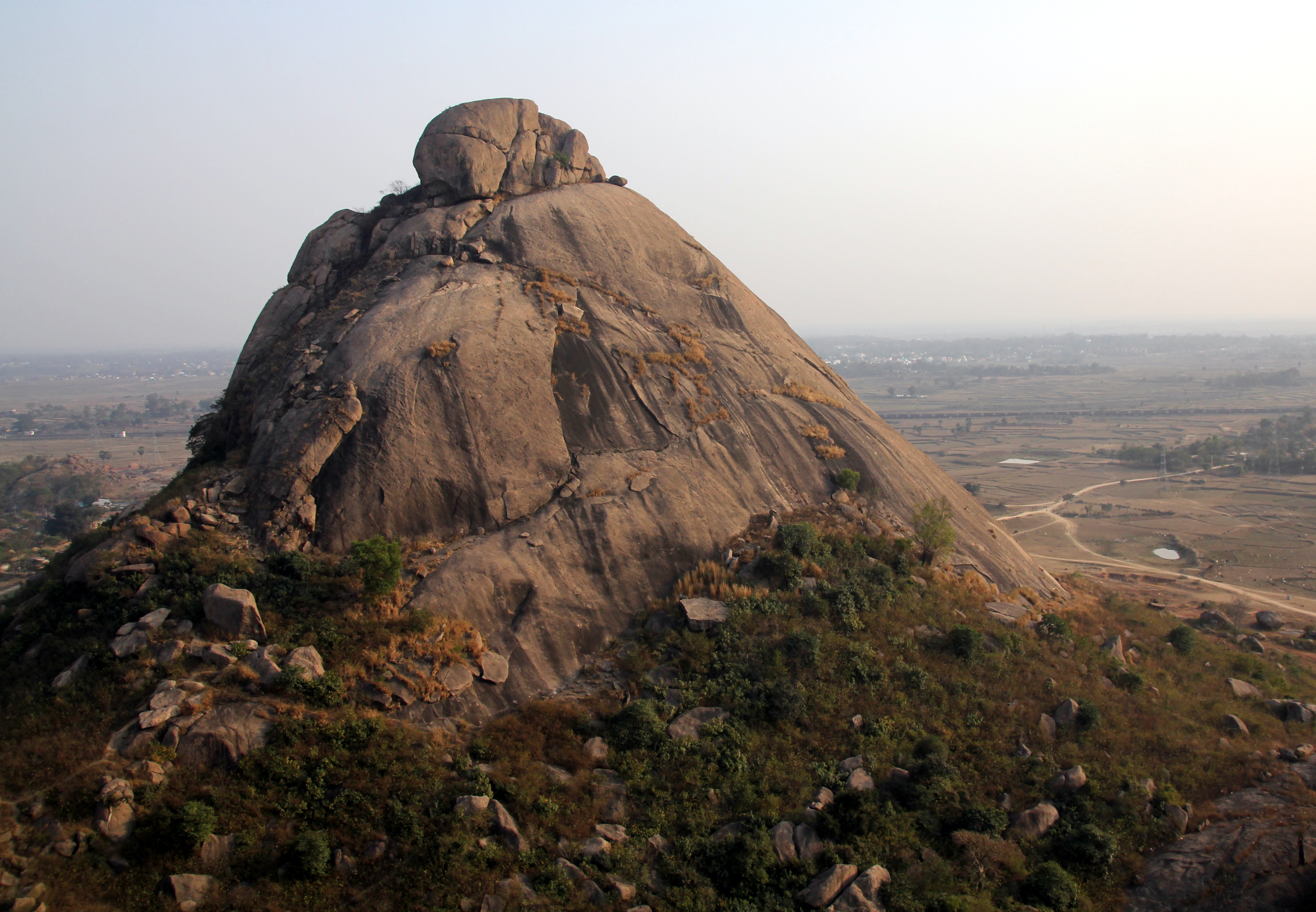
Rising precipitously near Adra in Purulia, Joychandi Pahar consists of three granite monolith peaks with an ancient Chandi Mata temple at the summit reached via 500 rock steps. Celebrated as the filming location for Satyajit Ray's classic film, it is also a premier rock-climbing base in eastern India.

Dakhil Darwaza (Salami Darwaza) Hidden Gem

Dakhil Darwaza (Salami Darwaza)

Malda & Gour Medieval Ruins

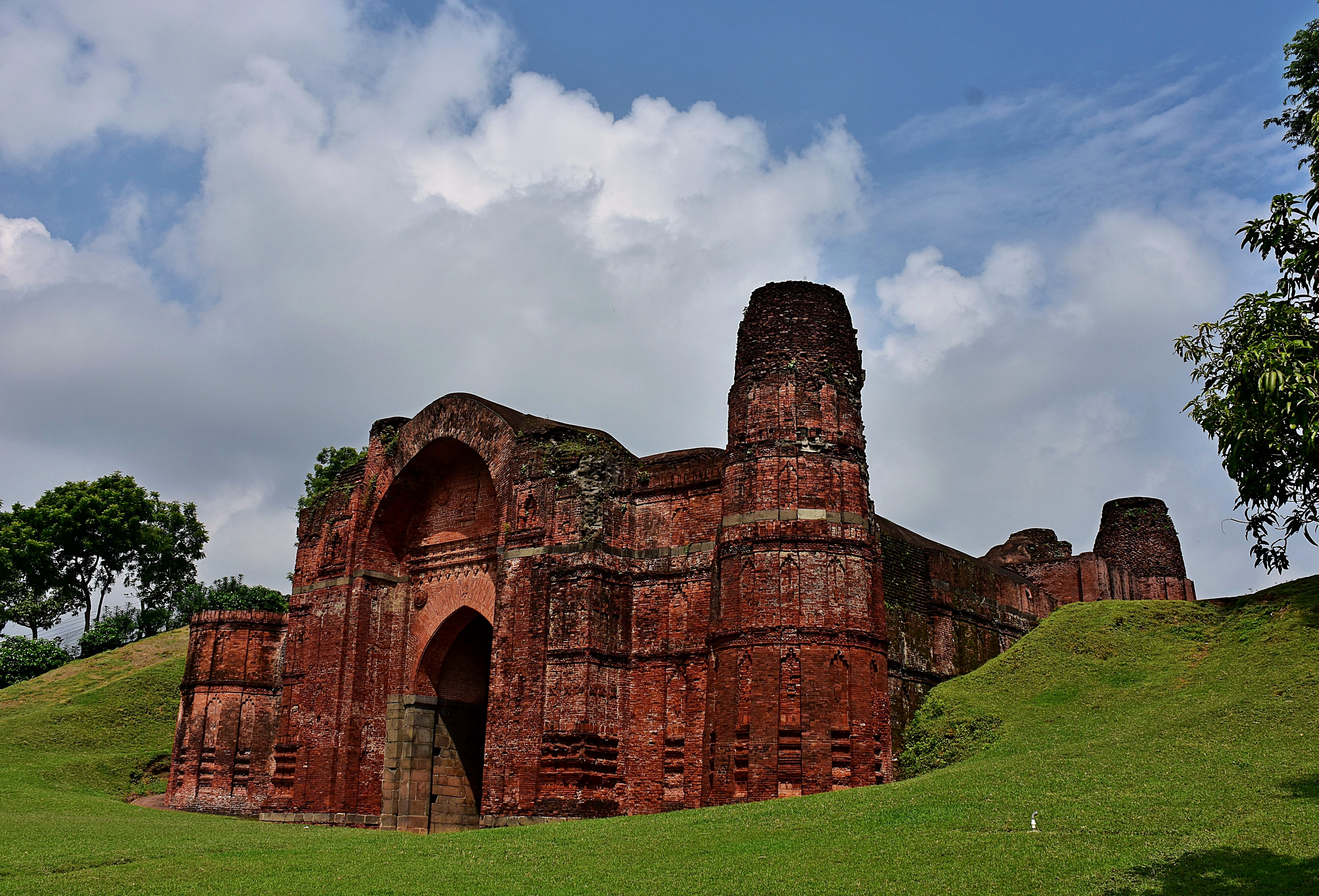
Constructed around 1425 CE by Sultan Nasiruddin Mahmud Shah, Dakhil Darwaza served as the grand northern triumphal gateway to the citadel of Gour. Spanning 113 feet across with 60-foot-high four-story circular bastion towers, this monumental red-brick portal is embellished with fine terracotta rosettes and floral arabesques.

Adina Mosque (Pandua)

Adina Mosque (Pandua)

Malda & Gour Medieval Ruins

Built in 1373 CE by Sultan Sikandar Shah at Pandua, Adina Mosque was once the largest mosque in the entire Indian subcontinent, modeled on the Great Mosque of Damascus. Its colossal rectangular courtyard measures 500 by 300 feet, featuring 306 vaulted domes, intricately carved mihrabs, and royal stone zenana galleries.

₹25 (ASI entry) View Spot →
Firoz Minar (Tower of Victory) Hidden Gem

Firoz Minar (Tower of Victory)

Malda & Gour Medieval Ruins

Constructed in 1489 CE by Sultan Saifuddin Firoz Shah, this five-storey, 84-foot-high tower served both as a victory monument and as a minaret for calling prayers. The lower three storeys are twelve-sided polygons while the upper two are cylindrical, finished with terracotta bands and an interior winding staircase of 73 steps.

Baroduari Mosque (Bara Sona Masjid)

Baroduari Mosque (Bara Sona Masjid)

Malda & Gour Medieval Ruins

Commenced by Sultan Alauddin Husain Shah and completed by his son Nusrat Shah in 1526 CE, Baroduari ('Twelve-Doored') Mosque is also known as the Great Golden Mosque (Bara Sona Masjid) because its 44 domes were originally overlaid with gold leaf. Measuring 168 feet by 76 feet, it is the largest preserved monument in Gour.